Data Enrichment Techniques: What Actually Works in 2026
Data enrichment techniques compared from the field: scraping and cleanup, DIY pipelines, waterfall providers, and the live multi-source fetch replacing them.
Ask an outbound team how enrichment actually happens and you rarely hear about one tool. You hear about a Google Maps export full of dead websites, a cleanup pass in a spreadsheet, two providers chained in a waterfall, and a verifier bolted on the end because nobody trusts the result.
Every layer exists because the layer before it leaks.
This is a field guide to data enrichment techniques as teams really run them in 2026: scraping and cleaning, DIY pipelines, waterfalls, verification, and the live multi-source fetch that is quietly replacing the whole stack.
Key Takeaways#
- Most enrichment stacks are four techniques taped together: scrape, clean, waterfall, verify.
- Practitioners report waterfall match rates stuck around 60-70%, with credits spent on stale records.
- Each extra layer exists because the previous one returns incomplete or aging data.
- A live multi-source fetch collapses the stack: one call, sourced at read time, verified on the way out.
Which Data Enrichment Techniques Do Teams Actually Use?#
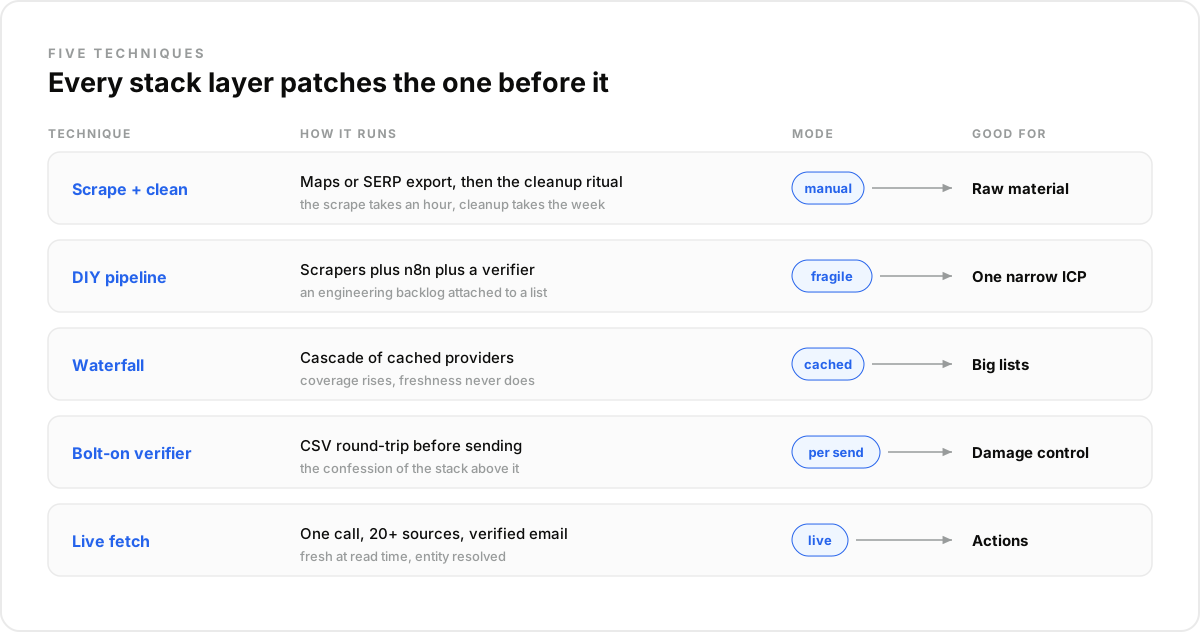
Five techniques cover almost every real stack: scraping public sources and cleaning the export, wiring a DIY pipeline from scrapers and automation tools, cascading paid providers in a waterfall, bolting a verifier on the end, and fetching live from multiple sources in one call. Most teams run three at once.
The interesting part is not the list, it is the sequence. Teams rarely choose a stack; they accumulate one. Each technique below got added to patch the failure of the one before it.
What Data Enrichment Is NOT#
Enrichment gets confused with three of its neighbors. It is not data cleansing, which repairs what you already have. It is not the analytics-style append that BI vendors describe. And it is not lead generation. Each mix-up sends a team shopping in the wrong category.
Not cleansing. Deduplicating domains, fixing formats, dropping dead rows: that is cleansing, and it repairs existing data. Enrichment adds data you never had, from outside. A scraped list needs cleansing before enrichment is worth paying for.
Not the BI append. When IBM or Domo define enrichment, they mean merging third-party demographics into a warehouse for analytics. Valid, but a different job: nobody sends an email to a segment.
Not lead generation. Enrichment completes records you already chose. Deciding who belongs on the list is a search problem, the job of a people search API, and no amount of enrichment fixes a badly chosen list.
Does Scraping and Cleaning Still Work?#
Scraping works as a zero-budget list builder and fails as an enrichment technique. A Maps or SERP export gives you names, websites, and whatever contact detail happens to be public. What it cannot give you is the current, verified detail that outreach actually depends on.
The post-scrape ritual practitioners describe is always the same: dedupe domains and phones, drop the directory URLs and dead sites, then chase the missing emails by hand or through a VA. The scrape took an hour. The cleanup takes the week.
Local agencies keep doing it anyway, because the alternative they compare it to is paying forty to eighty dollars per directory lead that gets resold to five competitors. Scraping is cheaper; it is just not enrichment, only raw material for it.
Can You Build the Pipeline Yourself?#
You can: scrapers plus n8n or Make plus a verifier is a real technique, and for one narrow ICP it produces decent lists. The practitioners who run these pipelines agree on where it hurts: maintenance. Selectors break, APIs change, and the pipeline becomes a product you never meant to own.
One GTM lead described cobbling together a crawler and half a dozen scrapers with n8n and losing more time to the plumbing than to the outreach it was supposed to feed. That is the honest trade: full control, zero subscription, and an engineering backlog attached to your lead list.
Is Waterfall Enrichment Still Worth It?#
A waterfall chains providers so each one fills the gaps the last one left: try the first source, fall through to the next on a miss. It is the default coverage technique today, and the numbers practitioners share explain both why it exists and what it quietly costs.
The threads repeat the same shape. One team runs a big GTM database first and a second provider as fallback, and still reports match rates hovering in the sixties, with credits spent on records that were stale on arrival. A RevOps lead at a B2B fintech pushing sixty thousand lookups a month described leaving their orchestration platform once the playbooks stabilized: the table UI and per-seat pricing made sense while building, not while running.
The tools here are real and capable: Clay for orchestration, FullEnrich or Dropcontact for the cascade. The ceiling is structural, not a vendor flaw. Every layer in a waterfall is a cached database, and cascading caches raises coverage without ever raising freshness.
Why Does Every Stack End With an Email Verifier?#
Because nobody trusts the layers below it. A verifier is the confession of the stack above: if the sources returned current, validated contacts, the extra tool would have nothing to do. Teams run one anyway, because a bounced campaign costs more than one more subscription.
The tell is where verification lives: in a CSV round-trip between the enrichment tool and the sender. Export, upload, verify, re-export, import. Every hop is a place the list ages a little more.
One Live Fetch Instead of a Stack#
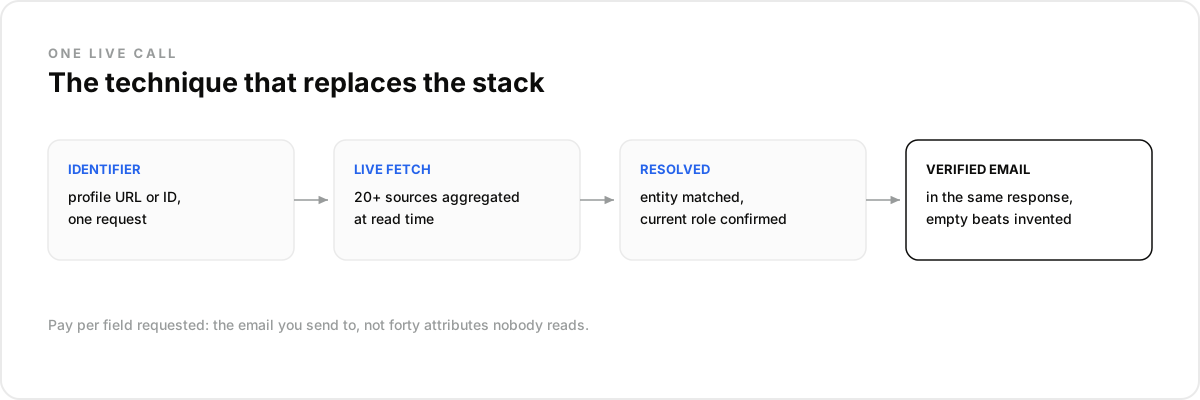
The technique replacing the pile is the live multi-source fetch: one call that pulls the profile at read time, aggregates twenty-plus sources, resolves the entity, and returns a verified work email in the same response. The scrape, the cascade, and the bolt-on verifier collapse into a single step.
import requests

response = requests.post(
    "https://api.dataforb2b.ai/enrich/profile",
    headers={"api_key": "YOUR_api_key", "Content-Type": "application/json"},
    json={
        "profile_identifier": "linkedin.com/in/john-doe",
        "enrich_profile": True,
        "enrich_work_email": True
    }
)

record = response.json()
Because the fetch happens at request time, freshness stops being a refresh-cycle question: the record is built when you ask for it. And since a people enrichment API charges per field requested, you pay for the email you send to, not for forty attributes nobody reads.
This is also the shape agents need. One GTM engineer described replacing an entire enrichment table UI with a terminal agent calling APIs directly, and not opening the old tool since. Over MCP, a data layer like DataForB2B exposes the same enrichment as native tools, so an agent chains search, enrich, and send without a parser in between.
You can run this exact call today. Start on the free tier from the pricing page.
How Do You Choose an Enrichment Technique?#
Choose by where accuracy has to exist: at list-build time or at action time. Lists tolerate aging; actions do not. That one question sorts the five techniques faster than any feature comparison, and most stacks were assembled without anyone asking it.
Best for scraping: local, one-off lists where budget is zero and volume is small. Best for a waterfall: high-volume lookups feeding a list, where a 60-70% match is acceptable. Best for a live fetch: anything that acts on the record: outreach, routing, agents. Not for a live fetch: enriching a million-row warehouse for analytics; a cached bulk provider is cheaper there and freshness matters less.
Whatever you evaluate, test the same five things:
- Match rate on your ICP, measured on your own sample, not the brochure number.
- Freshness at read time versus a refresh cycle you do not control.
- Verification inside the response versus bolted on in a CSV round-trip.
- Who owns maintenance when a layer breaks at 2am before a send.
- API and MCP access, so an agent can run the technique, not just a human in a UI.
In our experience the stack evolves in one direction: teams add layers while they think in lists, and remove them once they think in actions. What surprised us is how rarely anyone totals what the four-tool version costs per contacted lead.
How Do You Run Live Enrichment in Claude or Any LLM Agent?#
The single-call technique is also the easiest one to test: no waterfall to assemble, no CSV round-trips. Connect the enrichment tools to Claude over MCP and run your own bounce autopsy on a real list this afternoon.
- Create a free account at app.dataforb2b.ai/signup and grab your API key.
- In Claude, open Settings, then Connectors, and add https://mcp.dataforb2b.ai/mcp. The same server plugs into Cursor, VS Code, ChatGPT, or any MCP-enabled agent.
- Paste the brief: "Take these 50 leads, re-verify each against live records, and return current title, company, and a verified work email."
- Turn the working chat into a scheduled routine so it runs before every send batch without you.
Frequently asked questions
- What is an example of data enrichment?
- Before: Jordan, Senior Engineer, TechCorp, no email, scraped three months ago. After one enrichment call: Jordan, Staff Engineer at Ramp, verified work email, current company size and industry. That before-and-after on a single row is the entire technique; everything else is how you get there.
- What is waterfall enrichment, and do you still need it?
- Waterfall enrichment chains providers so each fills the gaps the previous one left. You need it when every source you use is a separate cached database. A live fetch that aggregates twenty-plus sources runs that cascade server-side in one call, which is why hand-built waterfalls are fading.
- How do you stop enrichment from burning credits on stale data?
- Enrich at action time, not at list-build time. Narrow the list first, enrich only the records you are about to contact, and fetch live so you never pay to import a record that aged in someone else's cache. Timestamp what you store, so stale rows stay visible.
- What is the difference between data enrichment and data cleansing?
- Cleansing repairs what you already have: duplicates, broken formats, dead rows. Enrichment adds what you never had, pulled from outside sources. A scraped list usually needs cleansing before enrichment is worth paying for; there is no point enriching a duplicate or a defunct domain.
- When should enrichment run in an outbound pipeline?
- After narrowing, before contact. Search and scoring decide who matters; enrichment then completes only those records, at the moment of outreach. Running it earlier wastes spend on rows nobody will contact, and leaves time for the data to age between the enrichment and the send.