How to Track Company Headcount Growth as a Signal
How to track company headcount growth from the outside: live growth fields, function-level reads, alert thresholds, and what a rising curve really says.
Type headcount growth into a search engine and you get HR dashboards: formulas for tracking your own workforce. Useful, and not what sales, investment, or recruiting teams actually mean when they ask the question.
They mean other companies' headcount: the most public early signal a business emits, visible weeks before any announcement confirms it.
So this is how to track company headcount growth from the outside: the fields that make it queryable, how to read the curve, who should act on it, and the routine that watches it for you.
Key Takeaways#
- Headcount growth is an external signal: budget, expansion, and momentum, visible before announcements.
- Live growth fields make it queryable: one-month, six-month, and twelve-month change, plus recent hires.
- The read matters more than the number: where a company hires says what it is about to do.
- Rate beats size. A 12-person company adding five roles is a louder signal than a 5,000-person one adding fifty.
What Does Tracking Headcount Growth Actually Mean?#
Two different jobs share the phrase. Internal tracking is HR analytics: your own workforce, budgets, and attrition, done in HR tools. External tracking, this guide, watches other companies' headcount as a signal: growth means budget landed, teams are being built, and something is about to ship or sell.
The external version answers commercial questions. Which accounts in my segment are expanding? Which startup in my thesis is quietly staffing up? Which company will be fighting me for engineers next quarter? All three are headcount questions before they are anything else. The two jobs share vocabulary and nothing else, which is why half the advice on this query is aimed at the wrong one.
Why Is Headcount the Earliest Public Signal?#
Because companies staff before they announce anything. The round closes quietly, the roadmap gets approved internally, and hiring starts weeks before any press release, while headcount data updates as people actually join. Whoever reads the staffing first sees the strategy early.
A concrete shape: a 40-person fintech adds nine engineers and two sales leads over eight weeks, with no announcement anywhere. A quarter later the round lands and the vendor decisions are already made. The teams that read the staffing were in the conversation; the teams that read the news joined the queue.
It is also unusually hard to fake. A landing page can claim momentum; a payroll cannot. Twenty engineers joining in a quarter is a commitment someone funded, which is exactly what makes the curve worth watching.
Our guide to tracking company funding signals covers the sibling signal; headcount usually moves first.
What Headcount Tracking Is NOT#
Three lookalikes waste most of the effort here. External headcount tracking is not an HR dashboard, not follower-count watching, and not a quarterly database export. Each one misses the point in its own way, and the third quietly ruins the entire signal.
Not HR analytics. Tools built for tracking your own workforce answer different questions with private data. This discipline works entirely from outside signals.
Not vanity metrics. Follower counts inflate on a good launch. Headcount only moves when someone signs an offer letter.
Not a quarterly export. Growth is a rate, and a rate needs cadence. A snapshot pulled twice a year shows you size, never acceleration, and acceleration is the signal. By the time the next export lands, the burst you needed is already history.
Which Fields Make Growth Queryable?#
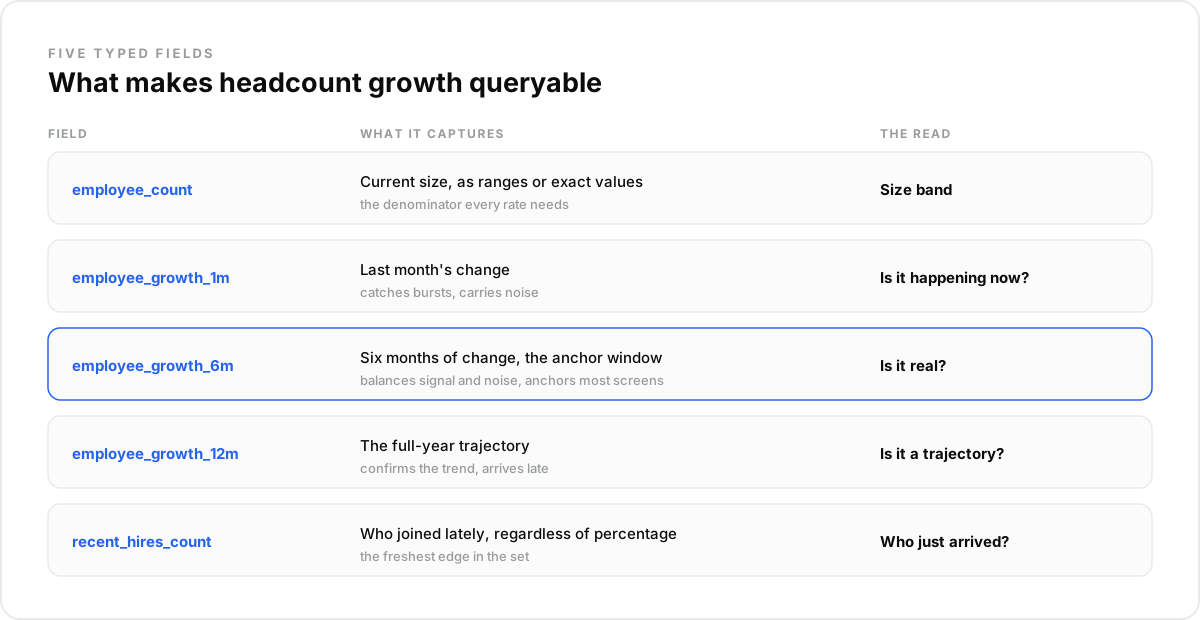
Five typed fields carry the whole discipline: employee count, one-month, six-month, and twelve-month growth, plus recent hires. Together they turn "is this company growing?" from a research task into a typed condition an agent can run across 75M+ companies every morning.
import requests

response = requests.post(
    "https://api.dataforb2b.ai/search/companies",
    headers={"api_key": "YOUR_api_key", "Content-Type": "application/json"},
    json={
        "filters": {
            "op": "and",
            "conditions": [
                {"column": "employee_growth_6m", "type": ">", "value": 20},
                {"column": "employee_count", "type": "between", "value": 11, "value2": 200},
                {"column": "industry", "type": "like", "value": "software"}
            ]
        },
        "count": 50
    }
)

growing = response.json()["results"]
The window choice is the craft. One-month growth catches bursts and noise; twelve-month growth confirms trajectory but late; six months balances both, which is why it anchors most screens. Recent hires adds the freshest edge: who joined lately, regardless of percentage.
How Do You Read the Curve?#
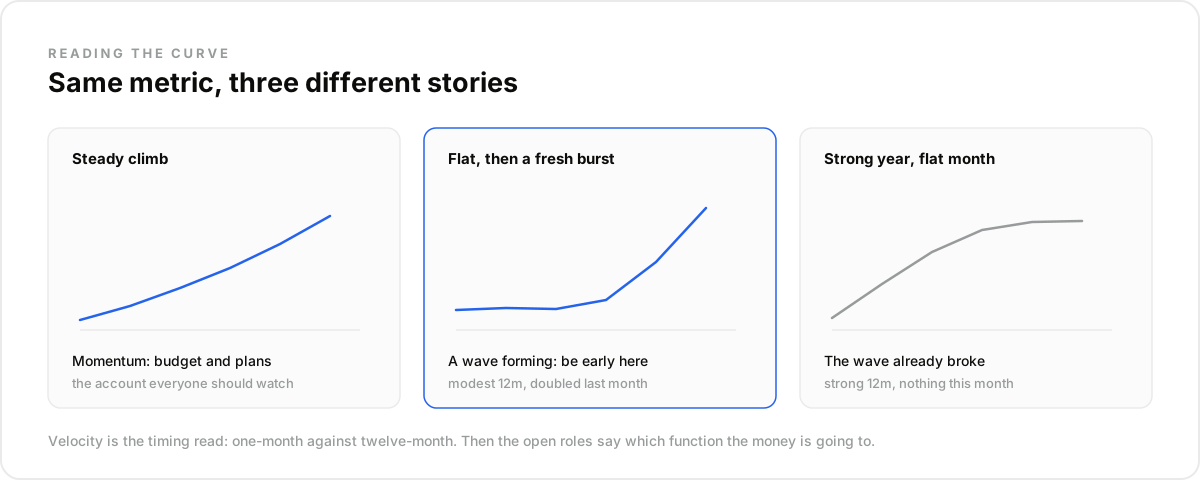
Read three things in order: the rate, the function, and the velocity. The rate says a company is moving. The function, visible through its open roles, says where the money is going. The velocity, one-month against twelve-month, says whether the move is starting or ending.
Function is the underrated read. Sales roles multiplying means a go-to-market push: budget is arriving and vendors are being chosen. Engineering-heavy growth means a product bet, quieter but earlier. A jobs search on the company name turns this read into data instead of guesswork.
Velocity settles timing. Strong twelve-month growth with a flat last month is a wave that already broke; modest overall growth that doubled last month is one that is forming. The second one is where being early pays, and it is invisible in any single snapshot.
Who Should Act on a Rising Headcount?#
Anyone whose outcome depends on catching companies in motion. The same curve reads three ways: for sales it is budget arriving, for investors it is momentum before the announcement, and for recruiters it is next quarter's hiring competitor, or client. One signal, three plays.
- An SDR agent flags 50 to 200-person accounts growing 20%+ in six months: budget is landing and the stack is being chosen.
- A deal-sourcing agent treats a staffing burst at a quiet startup as the earliest confirmation that a round is real.
- A recruiting agency watches growth accounts as future clients, and as the companies about to raid its candidates.
Best for: segments where growth converts to buying, hiring, or investing decisions: SaaS, services, anything headcount-led. Not for: markets where teams stay flat by design; there, funding and job-change signals carry the timing instead.
How Do You Run This in Claude or Any LLM Agent?#
The tracker runs as one scheduled conversation. Connect the data tools, define the segment once, and a weekly routine returns the movers with their curves, new entrants flagged, and the function read attached, without a dashboard or a spreadsheet in sight.
- Create a free account at app.dataforb2b.ai/signup and grab your API key.
- In Claude, open Settings, then Connectors, and add https://mcp.dataforb2b.ai/mcp. The same server plugs into Cursor, VS Code, ChatGPT, or any MCP-enabled agent.
- Paste the brief: "Every Monday, find software companies between 11 and 200 people with 6-month headcount growth above 20%. Flag new entrants and tell me which functions they are hiring for."
- Turn the working chat into a scheduled routine so the screen runs weekly without you.
The Mistake Most Teams Make#
The mistake most teams make is reading size instead of rate. Big companies dominate any absolute view, so the screens fill with enterprises adding fifty people to fifty thousand, while the 12-person startup that just doubled, the actual signal, never surfaces.
The second mistake is stopping at the number. Growth without the function read is a headline without the story: 30% growth into sales and 30% growth into a warehouse are different investments and different plays. In our experience the pairs that convert are rate plus function, and what surprised us is how few trackers ever join the two.
The growth fields, the jobs read, and the routine all run on live records through DataForB2B's company data API, behind one key.
The curve is public; the edge is reading it weekly. Point a routine at your segment today, starting at the pricing page.
Frequently asked questions
- What is the best way to track company headcount?
- Query it as data instead of checking pages: growth fields, one, six, and twelve-month, plus recent hires, filtered across your segment on a schedule. A weekly automated screen with a function read beats any manual check, because growth is a rate and rates need cadence.
- Can you track a competitor's headcount growth?
- Yes: external headcount is observable data. A company search returns their current size and growth rates, and a jobs search shows which functions they are staffing, which is the closest public view of their roadmap. Our competitor monitoring guide wires it into a full watch.
- What growth rate counts as a signal?
- Calibrate to size, not to a universal number. Twenty percent in six months is loud for a 100-person company and routine for a ten-person one. The reliable pattern is rate out of proportion to size, confirmed by open roles in a function you care about.
- Where does headcount data come from?
- From live company records aggregated from public professional data, queried at read time. The alternative, quarterly database exports, shows size but destroys the rate: by the time a snapshot lands, the acceleration it captured is months old. For a timing signal, freshness is the product.
- Is headcount growth a better signal than funding?
- Earlier, usually. Hiring starts before rounds are announced and continues between them, so headcount moves while funding is still quiet. Funding confirms and timestamps; headcount anticipates. The strongest screens run both: growth to get early, the round to confirm and act.